
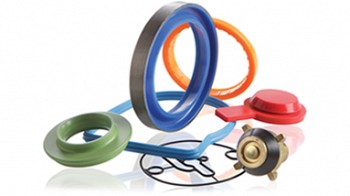
Viton® Seal
ISO 9001 Registered

Problem Solving Products, Inc. Logo
Problem Solving Products, Inc.

7108 S. Alton Way, Unit I
Centennial, Colorado 80112
(303) 758-2728

Basic Information
Home
Contact Information
Quality Policy

Viton O-rings Seals
Viton® o-rings, seals
Viton® news
Viton® news archive

Kalrez O-rings Seals
Kalrez® o-rings, seals
Kalrez® news
Kalrez® news archive

Simriz O-rings Seals
Simriz® o-rings, seals

Elastomers
Elastomers
Elastomer properties
Fluid compatibility

Mechanical Seal Design
Operating principles
Classification
Application limits
Drive mechanisms
Loading devices
Mating ring types
Gland design

O-ring, Seal Design
O-ring, seal design
Seal failure
AS568A sizes

Products
Products

Industries
Industries

Miscellaneous
Problems solved
O-ring, seal tips
spacermechanical shaft
spacermechanical seals
spacerpneumatic seals
spacerViton® o-rings
spacerabrasion o-rings
spacerextruded rubber
spacerlow temp. seals
spaceroil seal materials
spaceroil seal basics
spacerteflon encapsulated 1
spacerteflon encapsulated 2
spacernitrile o-ring
spacerlathe-cut o-ring
spaceracid o-rings
spacerhydraulic seals
spacerhigh temp. seal
spacerrubber o-ring
spacermetric sizes
Glossary of terms

Resources
Resources

(303) 758-2728


Tip: Pneumatic Seals

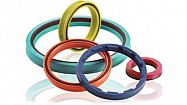
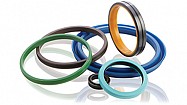
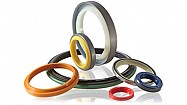
The term "pneumatic seals" actually describes a class of seals that are used in applications with either rotary or reciprocating motions. Pneumatic seals are exposed to air with a minimum amount of lubrication. They are often used in pneumatic cylinders and valves and usually are not under high pressure. However, pneumatic seals may be exposed to high operating speeds.

Rod seals, piston seals, u-cups, vee-cups and flange packings are just some of the sealing designs that can be used for a pneumatic seal. Sometimes a composite seal is used as a pneumatic seal. A composite seal is a product which has two or three materials manufactured into one seal. Often there will be an elastomer ring and a PTFE ring giving the seal the advantages of both materials.

The sealing orientation for pneumatic seals can include internal (rod seal), external (piston seal), symmetrical or axial seal. With the internal (rod) seal, the seal is fit into a housing bore and the sealing lip touches the shaft. With the external (piston) seal, the seal is placed onto a shaft and the sealing lip touches the housing bore. Since symmetric seals are the same on both sides they will function as either a rod or a piston seal. The axial seal fits axially against the housing.

Rotary applications need only one pneumatic seal (single acting) because it can seal in the one axial direction the application is moving. However, a reciprocating application will need two pneumatic seals (double acting) one for each of the directions.


Next a tip on Viton® o-rings


PSP Inc. at www.pspglobal.com
© 1997-2008, Problem Solving Products, Inc.
Submit Your Industrial Website
Site Map 1 | Site Map 2 | Site Map 3
Privacy Statement | Terms of Use