|
7108
S. Alton Way, Unit I |






Basic
Information
Home
Contact Information
Quality Policy
Terms & Conditions
Kalrez O-rings
Seals
Kalrez o-rings, seals
Critical
properties
Compatibility
chart
Zalak
seals
Availability
of parts
Kalrez
industries
Chemical
process
Semiconductor
Ultrapure
TriLobe
seal
Pharma
and food
Kalrez Sanitary
seals
FDA
compliance
Oil
and gas
Kalrez
news
Kalrez
news archive
Viton O-rings Seals
Viton o-rings, seals
Simriz
O-rings Seals
Simriz o-ring,
seal
Metal
Detectable Seals
Metal
detectable
Elastomers
Elastomers
Elastomer properties
Fluid compatibility
Mechanical
Seal Design
Operating principles
 Essential elements
Requirements
Fluid leakage
Effective forces
Power consumption
Lubrication
Seal balance
Classification
Application limits
Drive mechanisms
Loading devices
Mating ring types
Gland design
O-ring, Seal Design
O-ring, seal design
O-ring,
seal failure
PSP o-ring sizes
Products
Products
Industries
Industries
Miscellaneous
Problems solved
O-ring, seal tips
Glossary
of terms
(303) 758-2728
Home > Mechanical Seals Operating Principles > Effective Forces
Mechanical Seals Operating Principles
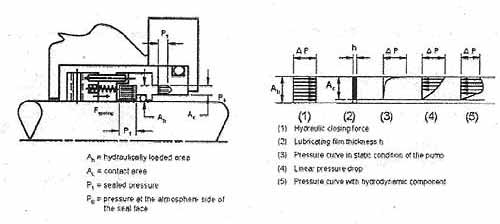
Effective forces in a Mechanical Seal
These are the forces operating in mechanical seals:
Axial and radial forces
Closing and opening forces
Hydrostatic and hydrodynamic forces
Leakage of a liquid lubricated mechanical seal
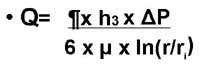
Key point: leakage rate Q strongly depends on the gap height h
- The gap height is determinate by several factors: materials, manufacturing quality, lubrication regime, face distortions.
- The leak rate of a contacting seal is also influenced by other pump related factors such as run outs and vibration levels.
Next: Power consumption of a liquid lubricated mechanical seal
We are located in the Denver Technological
Center in a suburb of Denver, Colorado
©1997-2017, Problem Solving Products, Inc.
Website Map | Privacy Statement
| Terms of Use