|
7108
S. Alton Way, Unit I |






Basic
Information
Home
Contact Information
Quality Policy
Terms & Conditions
Kalrez O-rings
Seals
Kalrez o-rings, seals
Critical
properties
Compatibility
chart
Zalak
seals
Availability
of parts
Kalrez
industries
Chemical
process
Semiconductor
Ultrapure
TriLobe
seal
Pharma
and food
Kalrez Sanitary
seals
FDA
compliance
Oil
and gas
Kalrez
news
Kalrez
news archive
Viton O-rings Seals
Viton o-rings, seals
Simriz
O-rings Seals
Simriz o-ring,
seal
Metal
Detectable Seals
Metal
detectable
Elastomers
Elastomers
Elastomer properties
Fluid compatibility
Mechanical
Seal Design
Operating principles
Classification
Application limits
Drive mechanisms
Loading devices
Mating ring types
Gland design
O-ring, Seal Design
O-ring, seal design
 3
Considerations
3
Considerations
Finite element
Static seals
Axial static 1
Axial static 2
Trapezoidal
Conical static
Boss seal
Radial static
Dynamic seals
Rotary
Reciprocating
To
consider 1
To consider 2
To consider 3
Semiconductor
Vacuum sealing
Permeation
Outgassing
Trapped
gas
O-ring,
seal failure
PSP o-ring sizes
Products
Products
Industries
Industries
Miscellaneous
Problems solved
O-ring, seal tips
Glossary
of terms
(303) 758-2728
Home > O-ring, Seal Design > Considerations > Considerations 3
Gland Design
Special Considerations, Part 3
|
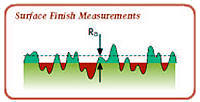
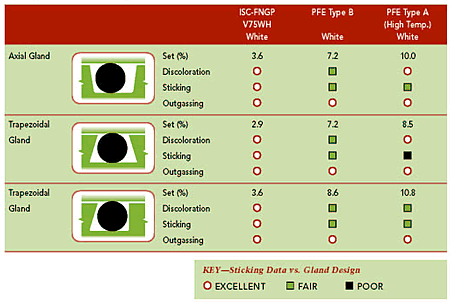
High-pressure applications may present unique challenges to elastomeric seals. Elastomers are essentially high-viscosity liquids - and as such will flow under extreme pressure conditions. In applications where the clearance gap is larger than that recommended for a traditional o-ring seal, the user should consider backup rings. These flat or contoured rigid rings are inserted on the low pressure side of the gland to prevent extrusion. Consideration of backup rings requires additional gland width to allow for elastomer expansion. In addition, chemical compatibility and ease of installation are other considerations when using backup rings. The surface finish of the gland can have a significant impact on the vacuum performance of seals. The following charts highlight terminology and processing techniques for specific surface finishes. Special care should be taken when sealing quartz components - not only due to the potentially irregular surface finish, but also to "light piping" effects on clear components in the sealing contact areas. Polymeric glands offer unique challenges if plastic deformation and creep of the sealing components are not taken into account. |
 |
Surface
Finish Processes
Next Topic Semiconductor Plasma Environments and Elastomer Seals
We are located in the Denver Technological
Center in a suburb of Denver, Colorado
©1997-2017, Problem Solving Products, Inc.
Website Map | Privacy Statement
| Terms of Use