|
7108
S. Alton Way, Unit I |






Basic
Information
Home
Contact Information
Quality Policy
Terms & Conditions
Kalrez O-rings
Seals
Kalrez o-rings, seals
Critical
properties
Compatibility
chart
Zalak
seals
Availability
of parts
Kalrez
industries
Chemical
process
Semiconductor
Ultrapure
TriLobe
seal
Pharma
and food
Kalrez Sanitary
seals
FDA
compliance
Oil
and gas
Kalrez
news
Kalrez
news archive
Viton O-rings Seals
Viton o-rings, seals
Simriz
O-rings Seals
Simriz o-ring,
seal
Metal
Detectable Seals
Metal
detectable
Elastomers
Elastomers
 selecting
polymer types
materials chart
semiconductor
nitrile (buna-n)
FEP/PFA encapsul.
neoprene
history
processing 1
processing 2
processing 3
processing 4
specifications 1
specifications 2
specifications 3
Elastomer properties
Fluid compatibility
Mechanical
Seal Design
Operating principles
Classification
Application limits
Drive mechanisms
Loading devices
Mating ring types
Gland design
O-ring, Seal Design
O-ring, seal design
O-ring,
seal failure
PSP o-ring sizes
Products
Products
Industries
Industries
Miscellaneous
Problems solved
O-ring, seal tips
Glossary
of terms
(303) 758-2728
Home > Elastomers > Elastomer Selection
Selecting A Sealing Elastomer
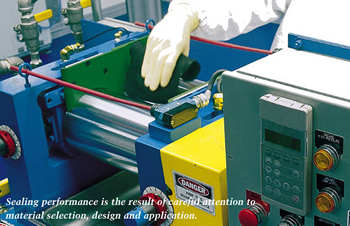
The selection of a sealing elastomer may seem daunting. By first understanding the basic chemical alternatives and properties, however, the selection process is simplified. Knowledge of an elastomer's properties is useful in predicting seal performance. The proper combination of chemical compatibility, thermal stability, contamination potential and physical properties will provide the user with the optimum seal.
The seal industry uses many tests to determine an elastomer's chemical and thermal compatibility as well as physical properties which can have a great influence on the performance in high-pressure or vacuum environments. These properties can provide an insight into the mode of degradation or the retention of sealing properties-all useful information in predicting seal life or comparing economic alternatives.
Another difference in elastomer compounds is the compounding (or mixing) of ingredients. These factors can provide unique pigmentation, improved specific chemical or thermal properties, improved dynamic performance, reduced cost, improved electrical properties, reduced friction or sticking, and many other aspects of seal performance.
Next Topic Types of Polymers
We are located in the Denver Technological
Center in a suburb of Denver, Colorado
©1997-2017, Problem Solving Products, Inc.
Website Map | Privacy Statement
| Terms of Use